
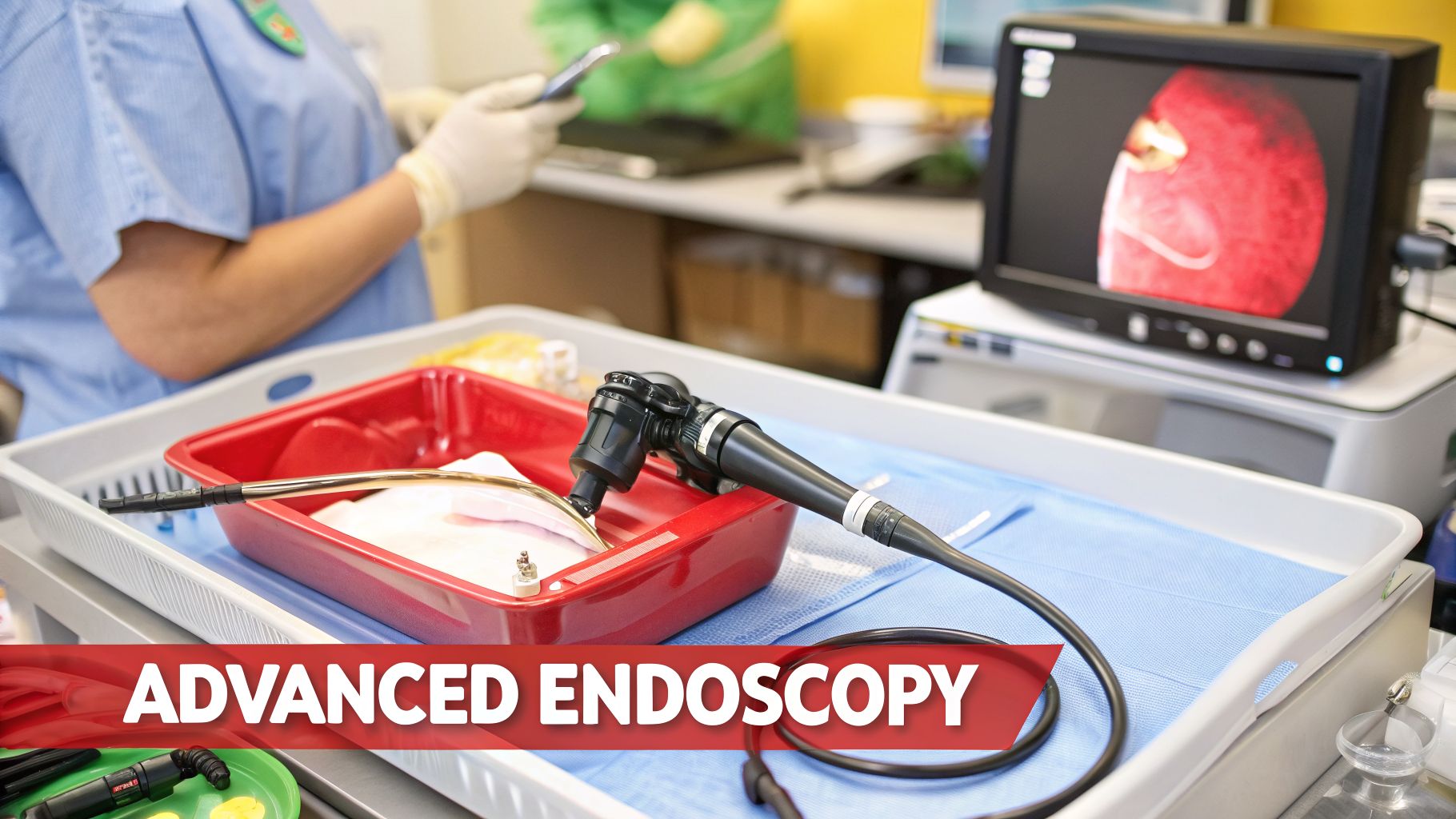
Endoscopy Specialist in Gondia | Advanced Endoscopic Care at LGI Hospital
What Is Endoscopy?
Endoscopy is a diagnostic procedure that allows a specialist to examine the inner lining of the digestive tract. During the procedure, the doctor uses a thin, flexible tube called an endoscope. It has a small camera and light at the tip. The camera displays detailed images on a monitor.
An upper gastrointestinal endoscopy can examine the esophagus, stomach, and duodenum. It can help identify inflammation, ulcers, bleeding, narrowing, abnormal growths, and other visible changes. In suitable cases, the doctor can also collect a small tissue sample for laboratory testing. Therefore, endoscopy can provide useful information when symptoms remain unexplained or require closer evaluation.
Endoscopy Specialist in Gondia at LGI Hospital
Choosing the right specialist matters when digestive symptoms continue. A qualified specialist can first understand your symptoms and medical history. Then, the doctor can decide whether an endoscopy is necessary.
At LGI Hospital, Dr. Yogesh Bang provides specialized gastroenterology and surgical gastroenterology care. His qualifications include MBBS, MS in General Surgery, DNB in Surgical Gastroenterology, and FMAS.
The approach focuses on proper patient assessment before recommending an endoscopic procedure. This helps avoid unnecessary testing. It also allows the specialist to select the most suitable diagnostic or therapeutic option for each patient.
When Do You Need an Endoscopy?
Not every digestive complaint requires endoscopy. However, persistent or concerning symptoms may need a detailed evaluation. Your doctor may recommend endoscopy when symptoms continue, return frequently, or occur with other warning signs.
An endoscopic examination may be considered for:
▪ Persistent upper abdominal pain
▪ Frequent acidity or heartburn
▪ Ongoing indigestion
▪ Difficulty swallowing
▪ Pain while swallowing
▪ Repeated vomiting
▪ Vomiting blood
▪ Black or tarry stools
▪ Unexplained weight loss
▪ Suspected stomach ulcers
▪ Suspected gastrointestinal bleeding
▪ Unexplained anemia
Your symptoms may have several possible causes. Therefore, a specialist should assess your condition before deciding whether endoscopy is appropriate.
Why Is Endoscopy Important?
Conditions Evaluated Through Endoscopy
An endoscopy helps specialists examine the upper digestive tract and understand the possible cause of persistent digestive symptoms. It can provide a clear view of the esophagus, stomach, and duodenum. Depending on the findings, the specialist may also take a biopsy or perform a suitable endoscopic procedure. However, endoscopy is not required for every digestive complaint. Your doctor considers your symptoms, medical history, previous reports, and overall health before recommending the procedure.
1.Gastritis
Gastritis causes inflammation of the stomach lining. It may develop due to infections, medicines, alcohol use, or other factors. Persistent gastritis symptoms may require detailed evaluation. An upper GI endoscopy allows the specialist to examine the stomach lining directly. It can help identify inflammation, erosions, ulcers, or other visible changes. The doctor may also take a small biopsy when clinically required.
▪ Persistent stomach discomfort
▪ Nausea and bloating
▪ Frequent indigestion
▪ Inflammation of the stomach lining
▪ Erosions or ulcers
▪ Biopsy when required
Stomach Ulcers With Endoscopy Specialist in Gondia
A stomach ulcer is an open sore that develops in the stomach lining. It may cause burning pain, discomfort, nausea, or appetite changes. Some ulcers can also cause gastrointestinal bleeding. An upper GI endoscopy allows the specialist to examine the stomach directly and assess the ulcer. The doctor can also look for bleeding or other abnormalities. In selected cases, a biopsy may help with further evaluation.
▪ Burning or upper abdominal pain
▪ Nausea and stomach discomfort
▪ Reduced appetite
▪ Visible stomach ulcers
▪ Possible gastrointestinal bleeding
▪ Biopsy when clinically needed
Acid Reflux and GERD With Endoscopy Specialist in Gondia
Acid reflux occurs when stomach contents move back into the food pipe. Occasional reflux is common. However, frequent symptoms may indicate GERD and require medical evaluation. In selected cases, an upper GI endoscopy can help examine the esophagus and stomach. The specialist may look for inflammation or other visible changes caused by ongoing reflux. However, endoscopy is not necessary for every patient with acidity.
▪ Frequent heartburn
▪ Sour or acidic taste
▪ Burning discomfort
▪ Chest discomfort
▪ Difficulty swallowing
▪ Reflux-related esophageal changes
Difficulty Swallowing With Endoscopy Specialist in Gondia
Difficulty swallowing can make eating and drinking uncomfortable. Persistent swallowing problems may have several causes. They can involve the structure or function of the esophagus. An upper GI endoscopy allows the specialist to examine the food pipe directly. It may help identify inflammation, narrowing, abnormal tissue, or other visible changes. Based on the findings, the doctor may recommend medicines, further tests, or suitable endoscopic treatment.
▪ Difficulty swallowing food
▪ Difficulty swallowing liquids
▪ Pain while swallowing
▪ Esophageal inflammation
▪ Narrowing of the food pipe
▪ Abnormal tissue changes
Gastrointestinal Bleeding With Endoscopy Specialist in Gondia
Gastrointestinal bleeding can occur in different areas of the digestive tract. It may appear as blood in vomit or black, tar-like stools. Sometimes, slow bleeding remains hidden and contributes to anemia. These symptoms need timely medical evaluation. In suitable cases, endoscopy can help identify the source of bleeding. Certain endoscopic techniques may also help manage selected bleeding lesions.
▪ Vomiting blood
▪ Black or tar-like stools
▪ Hidden gastrointestinal blood loss
▪ Unexplained anemia
▪ Bleeding ulcers
▪ Selected endoscopic treatment.
Why Choose LGI Hospital for Endoscopy?
Choosing the right hospital supports safe and comfortable endoscopic care. LGI Hospital provides specialist-led digestive care under Dr. Yogesh Bang. The team focuses on accurate evaluation, appropriate procedures, and personalized treatment.
▪ Experienced Specialist: Expert care in surgical gastroenterology and digestive disorders.
▪ Advanced Endoscopy: Modern techniques for detailed diagnosis and selected treatments.
▪ Personalized Care: Evaluation based on your symptoms, medical history, and reports.
▪ Patient-Friendly Approach: Clear guidance before, during, and after the procedure.
▪ Comprehensive Care: Evaluation and treatment for a wide range of gastrointestinal conditions.
▪ Gondia Patient Support: Specialized endoscopy care for patients searching for an Endoscopy Specialist in Gondia.
Frequently Asked Questions (FAQ)
Endoscopy is generally well tolerated. Throat anesthesia or sedation may be used to improve comfort during the procedure.